
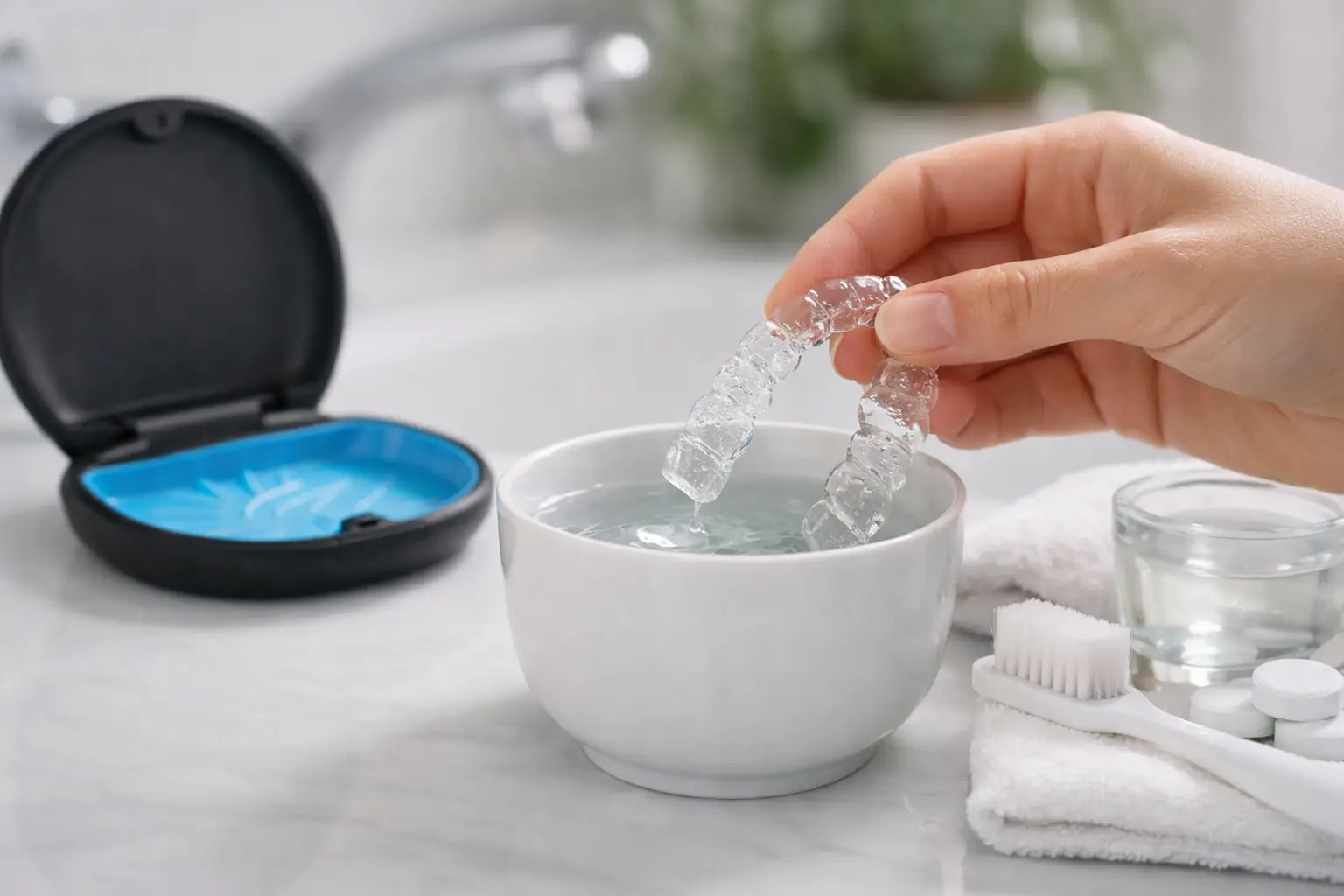
Clear aligners spend most of the day in close contact with your teeth, so a quick rinse alone is not enough. Knowing how to clean Invisalign aligners properly helps keep them clear, fresh, and comfortable while supporting the progress of your orthodontic treatment.
The good news is that aligner care is simple once it becomes part of your morning and evening routine. A few minutes of daily cleaning can help prevent cloudy plastic, lingering odour, plaque buildup, and stains that make aligners more noticeable when you smile.
How to clean Invisalign aligners safely
Start by removing your aligners and rinsing them under cool or lukewarm running water. This washes away saliva and loose debris before it has a chance to dry onto the plastic. Avoid hot water, which can warp clear aligners and affect how they fit.
Next, gently brush the aligners with a soft-bristled toothbrush that is used only for your trays. Use a small amount of clear, mild liquid soap, then brush both the inside and outside surfaces. Rinse thoroughly before placing the aligners back in your mouth.
A gentle touch matters. Invisalign aligners are durable enough for normal daily wear, but aggressive brushing can leave fine scratches. Those scratches can make the plastic look dull and may give plaque more places to cling to.
Soak them once a day
For a more thorough clean, soak your aligners daily in a cleaning solution recommended by your dentist or orthodontist. Purpose-made aligner cleaning crystals or tablets are designed to lift buildup without damaging the material. Follow the product directions for soaking time, then rinse the aligners well before wearing them.
Some patients ask whether denture-cleaning tablets are suitable. It depends on the product and your treatment instructions. Certain products may be appropriate, while others can be too harsh or leave a strong taste. When in doubt, choose a cleaner specifically made for clear aligners or ask your dental team for guidance.
What not to use on clear aligners
Many common cleaning products are too abrasive or too hot for Invisalign aligners. Toothpaste is a frequent mistake because it seems like the obvious choice, but many toothpastes contain abrasive particles that can scratch the plastic and make aligners appear cloudy.
Avoid using hot water, bleach, household cleaners, or alcohol-based mouthwash. Hot water may alter the shape of the trays, while harsh chemicals can damage the surface or leave behind residue you do not want in your mouth. Coloured soaps and mouthwashes can also stain clear plastic.
Do not put aligners in the dishwasher or boil them to sterilize them. Clear aligners are custom fitted, and even a small change in shape can interfere with their fit and the planned movement of your teeth.
Clean your teeth before putting aligners back in
Cleaning the trays is only one part of keeping them fresh. Before reinserting your aligners after a meal or snack, brush and floss your teeth whenever possible. Food particles, sugars, and bacteria can become trapped between your teeth and the aligners, increasing the risk of odour, plaque buildup, and tooth decay.
If you are away from home and cannot brush right away, rinse your mouth with water and rinse your aligners before putting them back in. Then brush and floss as soon as you can. Keeping a small travel toothbrush, floss, and aligner case in your bag can make this easier during workdays, school days, or family outings.
Water is the only drink that should be consumed while wearing Invisalign aligners. Coffee, tea, pop, juice, wine, and coloured sports drinks can stain the trays. Sugary or acidic drinks can also sit against your teeth under the aligners. If you do have anything other than water, remove your trays first and store them safely in their case.
A practical daily aligner-care routine
In the morning, remove your aligners, rinse them, and clean them gently before brushing and flossing your teeth. At night, repeat the process and include a soak if recommended by your dental team. This routine is usually enough to keep your aligners clear throughout each stage of treatment.
It also helps to rinse the trays every time you remove them. Saliva can dry quickly and leave a film that is harder to remove later. A quick rinse takes very little time and makes the evening clean easier.
Always place aligners in their protective case when they are not in your mouth. Wrapping them in a napkin is one of the most common ways trays get lost, especially at restaurants, school, or work. Pets are also drawn to the scent of saliva and can easily chew through an aligner left within reach.
Why aligners can smell or look cloudy
A mild odour or cloudy appearance usually means bacteria, plaque, or dried saliva has accumulated on the trays. It does not necessarily mean you have done anything seriously wrong, but it is a useful reminder to review your routine. More consistent rinsing, daily brushing, and soaking can often improve the appearance quickly.
Staining may be related to drinking coffee, tea, or other coloured beverages with aligners in. Smoking or vaping can also discolour the plastic and affect your oral health. Because Invisalign aligners are changed on a schedule set by your provider, they do not need to look brand new forever, but they should remain reasonably clear and clean while you wear each set.
If buildup does not lift with gentle cleaning, do not scrub harder or try a harsh chemical. Bring the aligners to your next appointment or contact your dental team for advice. They can help identify the cause and recommend a safe solution.
When to contact your dentist
Reach out if an aligner cracks, becomes noticeably warped, no longer fits properly, or is lost. Do not move on to the next set of trays without instructions, even if the current aligner is damaged. Your treatment schedule may need a small adjustment to protect the planned movement of your teeth.
You should also call if you develop persistent gum irritation, tooth pain, swelling, or sores that do not improve. Aligners can cause temporary pressure when you begin a new set, but ongoing or severe discomfort deserves professional attention.
At Prime Smile Dental Clinic, patients can ask questions about aligner care during routine visits or contact the team when something does not feel right. Clear instructions and prompt support can make treatment feel much more manageable.
A clean aligner is more comfortable to wear and easier to feel confident about. Keep your care routine simple, protect your trays in their case, and ask for help early if you notice a change in fit, clarity, or comfort.