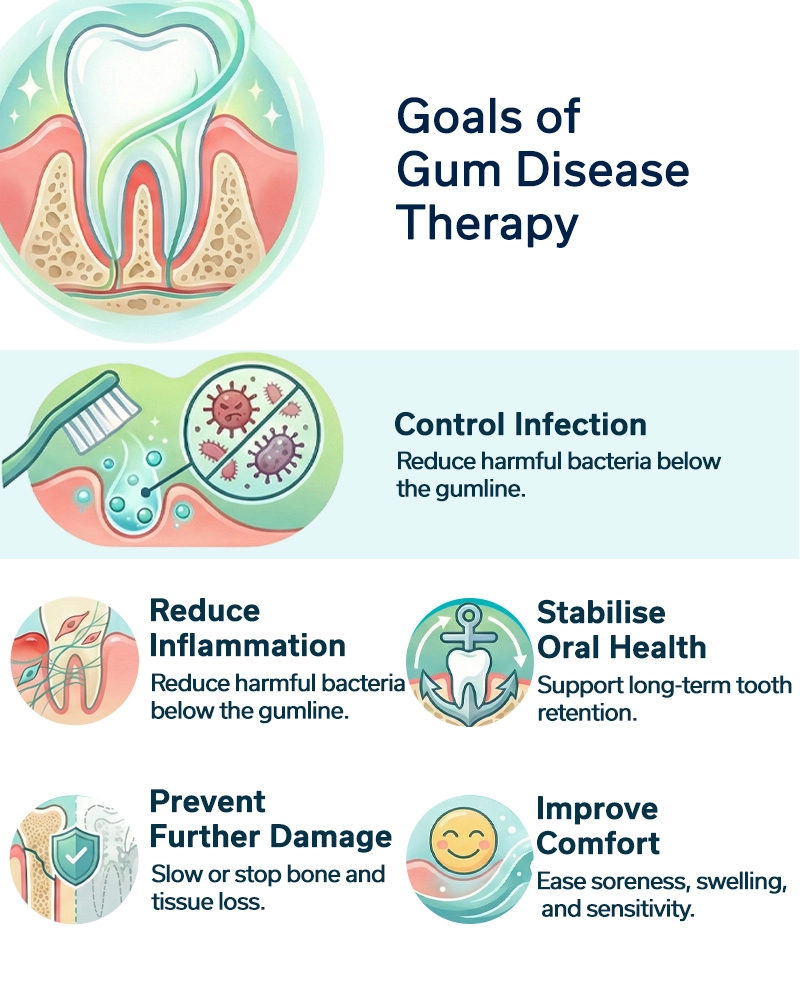


Gum Disease (Periodontitis) is a chronic bacterial infection affecting the gums and the underlying bone that supports the teeth. Starting as gingivitis (mild gum inflammation), if untreated, it progresses to periodontitis, leading to bone loss, receding gums, and eventually tooth loss. Gum Disease Therapy involves specialized, deep cleaning procedures and ongoing management to eliminate infection, halt disease progression, and restore the health of the tissues surrounding your teeth. At Prime Smile Dental, we provide comprehensive, non-surgical periodontal care to protect your smile and overall health.
Gum Disease Therapy focuses on removing plaque, calculus (tartar), and bacteria from above and below the gum line, where regular brushing and standard cleanings cannot reach. The severity of your condition dictates the specific procedure:
This is the gold standard for treating early to moderate periodontitis. It is a deep cleaning procedure performed under local anesthesia. Scaling removes tartar and bacteria from the root surface below the gum line, and Root Planing smooths the tooth root to remove rough spots where bacteria collect, helping the gum tissue reattach.
Following SRP, a localized antibiotic (gel or chip) may be placed directly into deep periodontal pockets to kill remaining bacteria and accelerate healing.
Once the infection is controlled, standard cleanings are replaced by specialized periodontal maintenance visits, usually scheduled every 3 to 4 months. These visits are crucial for managing the chronic nature of the disease and preventing recurrence.

Eliminating the infection is the only way to halt the progressive destruction of the supporting jawbone, which directly prevents teeth from loosening and falling out.

The procedure removes the irritants (plaque and tartar) responsible for chronic inflammation, resulting in healthier, tighter gum tissue that does not bleed easily.

Removes the large colonies of anaerobic bacteria trapped in deep gum pockets, which are the source of persistent bad breath.

Periodontal disease is linked to serious conditions like heart disease, diabetes, and stroke. Treating the infection reduces the overall inflammatory load on the body.
Step 1Periodontal Evaluation
We measure the depth of the gum pockets surrounding each tooth. Pockets measuring $4\text{ mm}$ or deeper, often accompanied by bleeding, indicate periodontitis requiring SRP.
Step 2Scaling and Root Planing (SRP)
The procedure is typically done in two separate appointments, focusing on one half of the mouth at a time, using local anesthesia for patient comfort.
Step 3Medication (Optional)
Antibiotics may be placed in specific deep pockets to target persistent bacteria and promote healing.
Step 4Re-evaluation
4–6 weeks after SRP, we re-measure the gum pockets to assess healing and ensure the infection has responded well to the treatment.
Step 5Periodontal Maintenance Plan
A customized 3- or 4-month professional cleaning schedule is established, as ongoing care is essential for permanent disease management.
SRP and periodontal maintenance are necessary for patients showing signs of:
Gums that bleed easily when brushing, flossing, or even spontaneously.
Measurements of $4\text{ mm}$ or more during a dental exam, indicating tissue detachment.
Visible recession of the gum line or teeth that feel slightly loose.
Persistent bad breath that does not resolve with standard brushing.
The cost of gum disease therapy in Aurora depends on the stage of gum disease and the type of treatment recommended. Early gum inflammation may be managed with improved home care and professional cleanings, while more advanced cases may require deep cleaning (scaling and root planing), follow-up periodontal maintenance visits, and close monitoring of gum pockets over time. Pricing can vary based on how many areas of the mouth are affected, how deep the gum pockets are, and whether treatment is completed over multiple appointments.
At Prime Smile Dental in Aurora, Ontario, we begin with a gum assessment to understand the condition of your gums and recommend the most appropriate therapy. Before treatment starts, we explain the plan clearly and provide an estimate. Our team can also help review your insurance or CDCP information and discuss expected costs whenever possible.
Gum disease therapy at Prime Smile Dental is guided by Dr. Shideh Khalilakbar, our lead dentist. Dr. Khalilakbar focuses on early detection and long-term stability—helping patients manage gum inflammation before it progresses. She explains what is causing the problem, what changes may be needed at home, and how professional therapy supports healthier gums. You’ll also receive practical guidance on brushing, flossing, and maintenance visits to help protect your gums over time.
Choosing a dental clinic is about more than services, it’s about feeling comfortable, informed, and confident in your care. At Prime Smile Dental in Aurora, we focus on clear communication, a calm environment, and consistent clinical standards for every patient.

We take time to listen to your concerns, explain findings in plain language, and walk you through treatment options so you can make informed decisions.

We accept CDCP and work with most dental insurance plans. Our team can help you understand coverage, billing, and expected costs before treatment whenever possible.

From a welcoming atmosphere to a gentle approach, our team works to make appointments feel calm and manageable—especially for patients who feel anxious about dental visits.

We use updated tools and thorough assessments to support accurate diagnosis and thoughtful treatment planning, with your long-term oral health in mind.
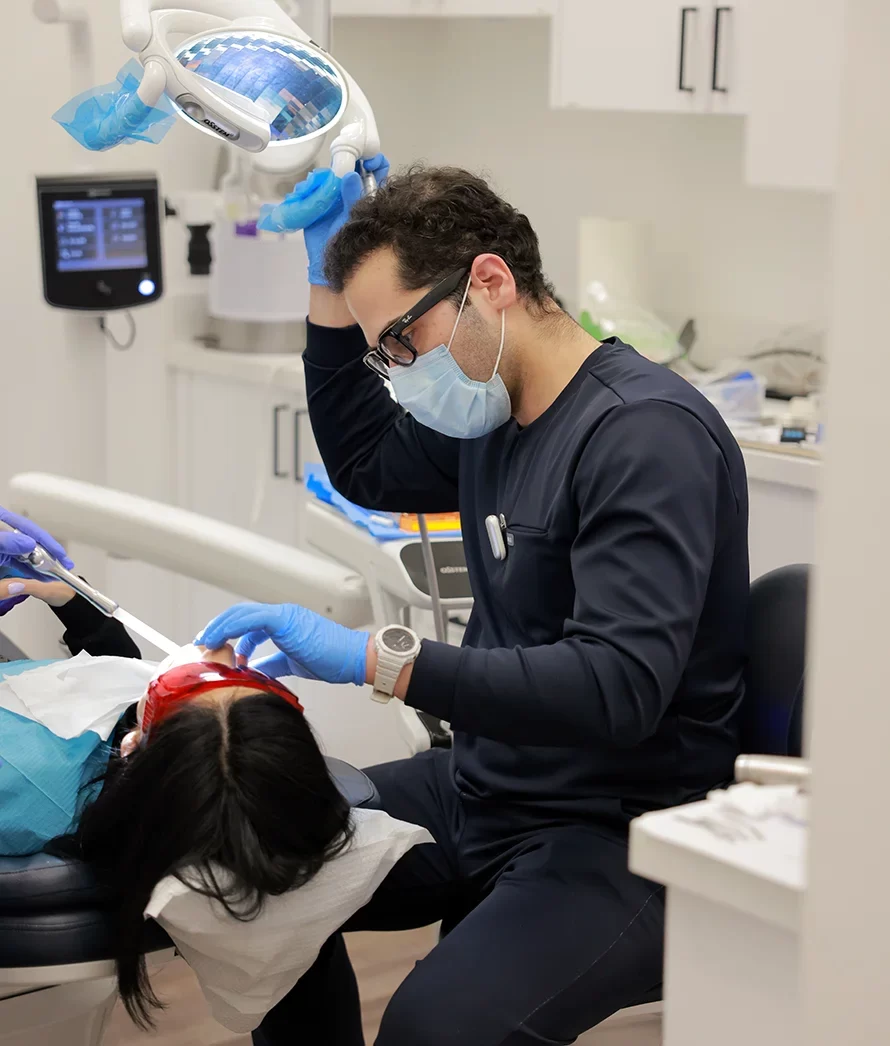
No. The procedure is performed using local anesthesia, ensuring you are comfortable throughout the deep cleaning. You may experience some mild soreness or sensitivity in the following day or two, which is easily managed with over-the-counter pain relievers.
Periodontitis is a chronic disease. Bacteria repopulate the gum pockets rapidly. A 3- or 4-month maintenance schedule is necessary to consistently disrupt the bacteria, preventing them from re-establishing deep infection and bone destruction.
No. Once gum tissue has receded or bone has been lost due to disease, it cannot grow back naturally. However, treating the disease prevents further recession, and surgical grafting procedures may be an option to cover exposed root surfaces.
Gum disease is chronic, meaning it can be controlled but rarely “cured.” Successful therapy eliminates the active infection and halts bone loss. Success requires ongoing commitment to meticulous home care and adherence to the prescribed periodontal maintenance schedule.
If you have bleeding gums, gum tenderness, persistent bad breath, or gum recession, book a gum disease consultation at Prime Smile Dental in Aurora. Call the clinic or request an appointment online to get a clear assessment and next steps.