A sore, bleeding gumline can feel like one more surprise in a pregnancy already full of changes. This guide to pregnancy dental care helps Aurora and York Region families understand what is normal, when to book a visit, and how to keep dental care manageable while preparing for a baby.
Pregnancy does not mean putting oral health on hold. In fact, routine dental exams, hygiene appointments, and needed treatment can help you stay comfortable and address small concerns before they become painful or urgent. The goal is not perfection. It is steady, practical care that fits your health needs, schedule, and stage of pregnancy.
Why pregnancy can affect your mouth
Hormonal changes can make gums react more strongly to plaque, the sticky bacterial film that forms on teeth every day. Even people who normally brush and floss consistently may notice tender gums, swelling, or bleeding when brushing. This is often called pregnancy gingivitis.
Morning sickness can also affect teeth. Repeated exposure to stomach acid may soften enamel, particularly on the inside surfaces of the front teeth. Dry mouth, changed food preferences, and more frequent snacking can add to the risk of cavities.
These changes are common, but they should not be ignored. Bleeding gums are not something you need to simply accept for nine months. A dental team can check for gum inflammation, remove hardened plaque that brushing cannot remove, and suggest a home-care routine that feels realistic when you are tired or nauseated.
Pregnancy dental care: what appointments are safe?
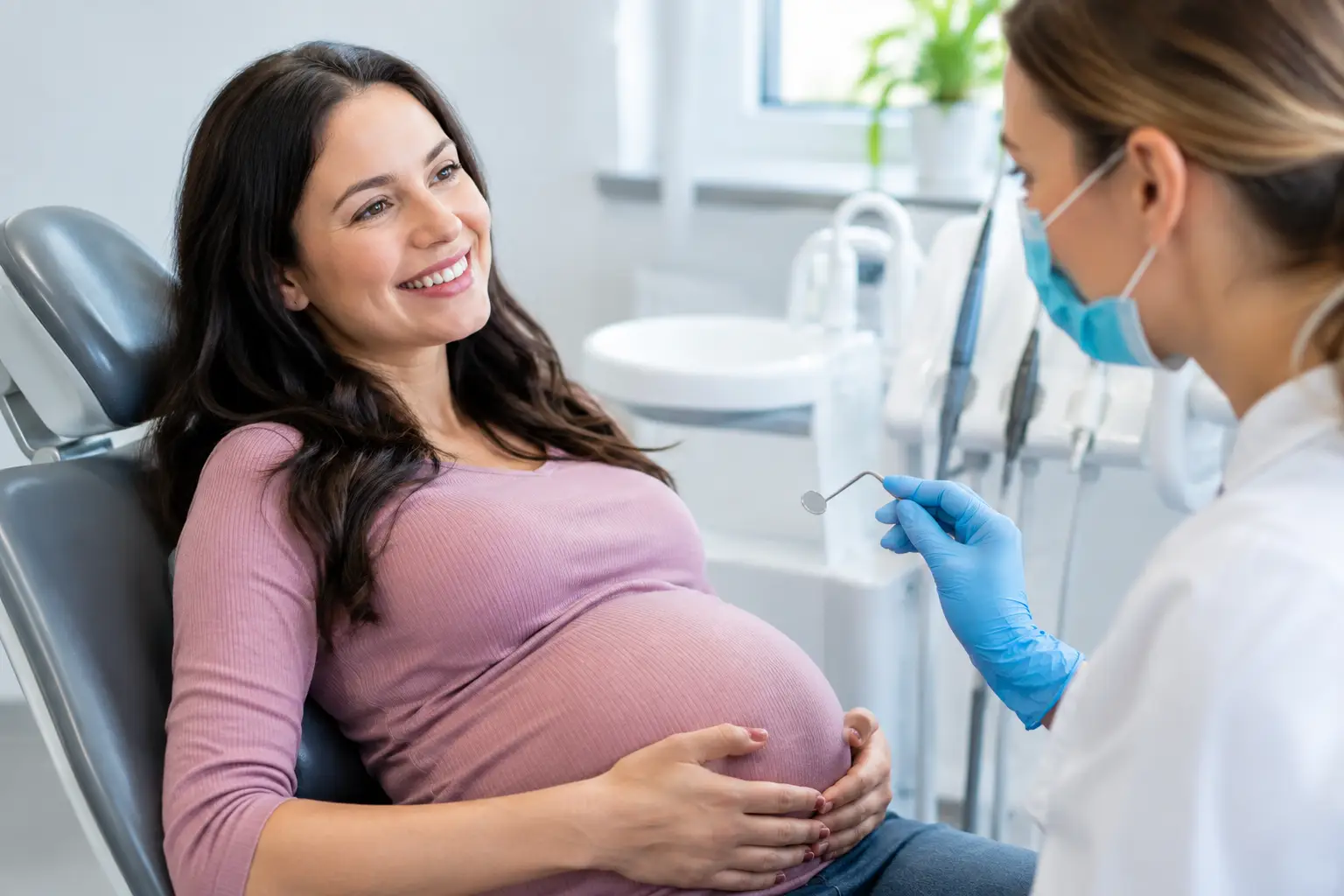
Regular dental examinations and professional cleanings are generally appropriate during pregnancy. If you are overdue for a checkup, newly pregnant, or noticing gum changes, let the dental office know when you book. Sharing your due date, any medications or supplements, and relevant medical history helps the team tailor your visit.
The second trimester is often the most comfortable time for non-urgent dental treatment because morning sickness may have eased and it may be easier to recline in the dental chair. However, needed care should not automatically wait. A cracked tooth, cavity, infection, or persistent pain can become more difficult to manage if treatment is delayed.
Dental X-rays may be recommended when they are necessary to diagnose a problem or plan treatment. Modern digital dental X-rays use very low radiation, and your dental team will use appropriate precautions. Whether an X-ray is needed depends on your symptoms and clinical findings, not just your pregnancy stage. If you have questions, ask why the image is recommended and how it will affect the treatment decision.
Local anesthetic is commonly used for dental treatment during pregnancy, and managing pain or infection promptly is often safer than leaving a problem untreated. Your dentist will review your health information and may coordinate with your prenatal care provider when there are pregnancy complications, medication questions, or a higher-risk medical history.
Do not wait on tooth pain or swelling
Pregnancy is not a reason to postpone urgent dental care. Contact a dental office promptly for severe toothache, facial swelling, a broken tooth, a lost filling or crown, bleeding that will not stop, or signs of infection such as fever or drainage. Dental infections can worsen quickly, and emergency treatment focuses on relieving pain and protecting your overall health.
If sitting back makes you dizzy or short of breath later in pregnancy, tell the team. Small changes to your chair position, breaks during treatment, or a shorter appointment can make a meaningful difference.
A simple home routine when energy is limited
The best routine is one you can repeat on busy, low-energy days. Brush twice daily with a soft-bristled toothbrush and fluoride toothpaste. Use gentle pressure at the gumline rather than scrubbing harder when gums bleed. Cleaning between teeth once a day with floss, interdental brushes, or another dentist-recommended option helps reduce the plaque that contributes to gum inflammation.
After vomiting, avoid brushing immediately. Acid temporarily softens enamel, and brushing right away can increase wear. Rinse your mouth with water first. Some people find a rinse made with a small amount of baking soda in water soothing, but plain water is also helpful. Wait about 30 minutes before brushing.
Frequent snacking is sometimes necessary during pregnancy, especially when nausea makes larger meals difficult. Rather than aiming for an unrealistic perfect diet, think about how often teeth are exposed to sugar or acid. Water between snacks helps rinse the mouth, and cheese, yogurt, nuts, vegetables, and other low-sugar choices can be easier on teeth than sipping sweet drinks throughout the day.
If toothpaste flavour triggers nausea, try a mild flavour or brush at a different time of day when symptoms are less intense. A smaller toothbrush head can also make brushing the back teeth more comfortable. Mention these challenges at your hygiene appointment. Small adjustments are often more useful than feeling guilty about a difficult week.
Gum bleeding, lumps, and other changes to mention
Pregnancy gingivitis often improves after delivery, particularly when plaque is kept under control. Still, a dental assessment is worthwhile if gum bleeding is frequent, gums are very swollen, or you have bad breath that does not improve with routine cleaning. Periodontal disease is different from simple pregnancy gingivitis and may need more focused care.
Some pregnant patients develop a small red or purple gum growth that bleeds easily. These are often called pregnancy tumours, although they are not cancerous. They can look alarming, but many shrink after pregnancy. Your dentist should assess any new lump, sore, colour change, or area that does not heal, since not every mouth change has the same cause.
Contact your dentist sooner rather than later if you notice:
- tooth pain that lasts more than a day or disrupts sleep;
- swelling in the gums, face, or jaw;
- pus, a bad taste, fever, or difficulty swallowing;
- a loose tooth, a broken tooth, or bleeding that is heavy or persistent.
Planning dental visits around prenatal care
A dental appointment is easier when it is treated as part of your regular pregnancy planning, alongside prenatal checkups and pharmacy visits. Book a cleaning early if you are due, rather than waiting until discomfort develops. When you call, mention that you are pregnant and whether you have nausea, back discomfort, gestational diabetes, high blood pressure, or other concerns that may affect the visit.
Bring an up-to-date medication list. This includes prenatal vitamins, prescribed medications, over-the-counter pain relievers, and supplements. Do not start or stop medication for dental pain without checking with the clinician managing your pregnancy or your pharmacist. Pain relief and antibiotics are not one-size-fits-all during pregnancy.
Cost and coverage questions are reasonable to raise before treatment starts. Ask for a clear explanation of recommended care, timing, and expected fees. If you have private insurance, direct billing may reduce paperwork. If you are eligible for the Canadian Dental Care Plan, confirm what services and any co-payment may apply before your appointment. Coverage details can vary, and a dental office can help clarify the administrative steps.
For parents with other children, combining family appointments or choosing a time that works around school and work can make preventive care more realistic. Prime Smile Dental Clinic offers flexible appointment options and can help patients plan routine, restorative, and urgent visits without making the process feel complicated.
Looking ahead to your baby’s oral health
Your own dental care also sets the tone for family routines later on. Once your baby arrives, your schedule may become less predictable, so it helps to resolve active dental concerns beforehand where possible. Keep up with your own cleanings after delivery, especially if gum bleeding continued during pregnancy.
When your child’s first tooth appears, begin gently cleaning it with a soft infant toothbrush. A child should see a dentist by their first birthday or within six months of the first tooth coming in. Starting early makes dental visits familiar and gives parents a place to ask questions before a concern becomes stressful.
A comfortable dental visit during pregnancy can be one less item on a very long preparation list. If something feels different in your mouth, booking an assessment is a practical act of care for you now – and a helpful step toward the routines your growing family will build together.