A missing tooth can change more than a photo. It can make chewing on one side feel awkward, affect speech, or leave you wondering whether nearby teeth will shift over time. The best options for missing teeth depend on where the gap is, how many teeth are missing, the health of your gums and jawbone, and what feels manageable for your daily life and budget.
There is no single replacement that suits every patient. A front tooth that shows when you smile may call for a different solution than a missing molar at the back of the mouth. The right place to start is a dental assessment that looks at your oral health as a whole, not simply the empty space.
Why replacing a missing tooth can matter
Some people adapt well after losing a tooth, especially when it is near the back of the mouth. Even so, leaving a gap can lead to changes that are easy to miss at first. Nearby teeth may gradually lean into the space, which can alter your bite and make cleaning more difficult. The opposing tooth can also shift because it no longer has a tooth to bite against.
A missing tooth may place extra pressure on the teeth you still have. If several teeth are gone, eating a varied diet can become more challenging. Replacing a tooth is not only about appearance. It can help support comfortable chewing, speech, bite balance, and confidence.
Timing matters after an extraction or injury, but it is not always necessary to decide immediately. Your dentist may recommend allowing an extraction site to heal before placing a permanent restoration. If you have swelling, significant pain, bleeding, a broken tooth, or a tooth that has been knocked out, seek prompt dental care rather than waiting to see whether the problem settles on its own.
Best options for missing teeth: the main choices
Dental implants
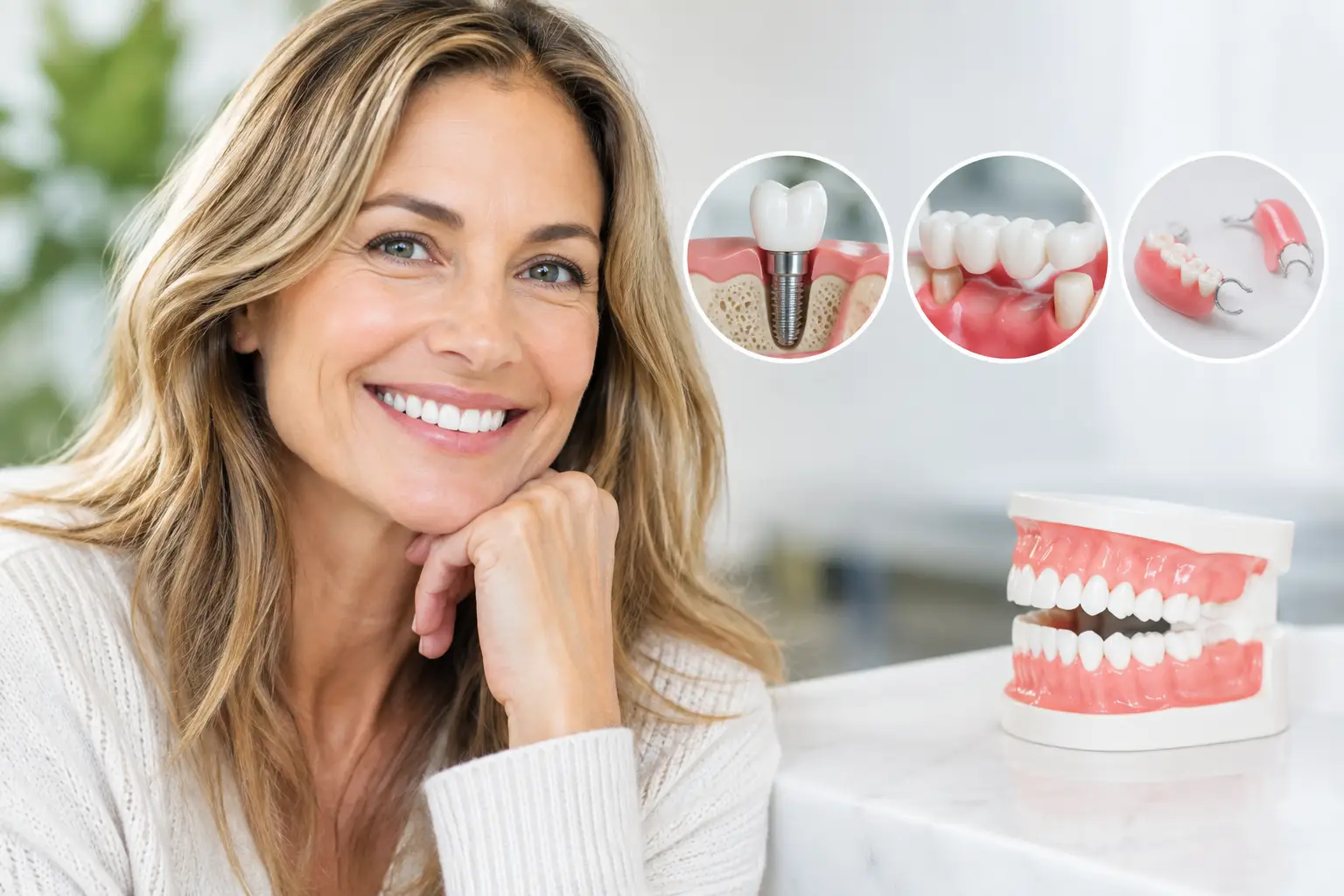
A dental implant replaces a missing tooth root with a small post placed in the jawbone. Once the area has healed, the implant can support a custom crown for one missing tooth. It can also support a bridge or help stabilize a denture when several teeth are missing.
For many patients, an implant feels and functions most like a natural tooth because it is fixed in place and does not rely on neighbouring teeth for support. It also helps stimulate the jawbone in the area where the tooth was lost. With consistent home care and regular dental visits, implants can be a long-lasting choice.
The trade-off is that implant treatment takes time and involves a surgical procedure. Healing can take several months, and some patients need a bone graft first if there is not enough healthy bone to support the implant. Smoking, uncontrolled diabetes, active gum disease, certain medications, and clenching or grinding can affect planning and outcomes. Implants also tend to have a higher upfront cost than other replacement options.
Dental bridges
A dental bridge fills the space left by one or more missing teeth. A conventional bridge is held in place by crowns fitted over the teeth on either side of the gap, with a replacement tooth between them. In some situations, an implant-supported bridge may be recommended instead.
Bridges are fixed, meaning you do not remove them to clean them. They can restore appearance and chewing function relatively efficiently, often without the healing time involved in implant surgery. A bridge may be a practical option when the neighbouring teeth already need crowns because of large fillings, fractures, or previous treatment.
A conventional bridge does require reshaping the supporting teeth. It also needs careful cleaning beneath the replacement tooth to protect the gums and the teeth holding it in place. If either supporting tooth develops decay or gum problems, the bridge may be affected. Your dental team can show you how to clean around it with floss threaders or other tools.
Partial dentures
A removable partial denture replaces one or several missing teeth. It may be made with an acrylic base, a metal framework, or flexible materials, depending on your needs. It is designed to fit around your remaining teeth and is removed for cleaning and while sleeping unless your dentist gives different instructions.
Partial dentures can be a cost-conscious way to replace multiple teeth, particularly when gaps occur in different areas of the mouth. They also avoid the surgery required for implants and can often be made while you are considering a longer-term plan.
Because they are removable, partial dentures take an adjustment period. They may initially feel bulky, and they require daily cleaning and proper storage. Over time, changes in your gums and jaw can affect the fit, making adjustments or replacement necessary. A well-designed partial denture should feel secure and comfortable, but it will not feel identical to natural teeth.
Full dentures
When all teeth in the upper or lower arch are missing, a complete denture may be the appropriate choice. Conventional full dentures rest on the gums and are shaped to restore the appearance of a natural smile. They can improve speech, support facial tissues, and make eating easier than having no teeth at all.
Full dentures are removable and should be cleaned every day. Adhesive may help some patients feel more secure, but a loose denture should be assessed rather than managed only with more adhesive. As the jawbone changes over time, dentures may need to be relined, adjusted, or replaced.
For patients who find a lower denture difficult to keep stable, implant-supported dentures may offer more retention. They remain removable for cleaning in many cases, but they connect to implants for a firmer fit. This approach involves surgery and additional cost, yet it can make a meaningful difference in chewing comfort and confidence for the right patient.
Temporary tooth replacement
A temporary replacement can be useful after an extraction, while an implant heals, or when a front tooth is missing and appearance is an immediate concern. Depending on the situation, this might be a temporary removable tooth, a temporary bridge, or another short-term option chosen by your dentist.
Temporary solutions are not just cosmetic. They can help preserve space and make day-to-day life more comfortable while you complete treatment planning. They are not designed to handle the same forces as a permanent crown, bridge, or implant, so follow the instructions you receive about eating and cleaning.
How to choose the right replacement option
The most suitable choice usually comes down to a few practical questions. How many teeth are missing? Are the teeth beside the gap healthy? Is there enough bone for an implant? Do you want a fixed solution, or are you comfortable with a removable appliance? How soon do you need the space restored?
Your dentist will also consider your bite, gum health, medical history, oral hygiene routine, and long-term goals. For example, a bridge can be sensible when adjacent teeth already need crowns, while an implant may protect healthy neighbouring teeth from being altered. A partial denture may be a helpful solution when several teeth are missing and implant treatment is not the right fit right now.
Cost is a valid part of the discussion. Ask for a clear treatment plan that explains the steps, expected timeline, maintenance needs, and fees. Dental insurance and Canadian Dental Care Plan coverage can vary by treatment and eligibility, so confirming coverage before starting can help you plan with fewer surprises.
Caring for your replacement teeth
Replacement teeth still need daily care. Brush twice a day with a soft toothbrush and clean between teeth as recommended for your specific restoration. Bridges and implants need special attention around the gumline, while dentures should be removed and cleaned with products suited to denture materials.
Regular examinations are equally valuable after treatment. They allow your dental team to check the fit of a denture, the health of gums around an implant, and the supporting teeth beneath a bridge. If a restoration feels loose, painful, cracked, or different when you bite, book an appointment rather than trying to adjust it yourself.
At Prime Smile Dental Clinic, treatment planning is designed to feel clear and manageable, with flexible appointments and direct insurance billing support. Whether you are replacing one tooth or rebuilding your smile after several losses, a thoughtful consultation can turn an uncertain decision into a practical next step.