
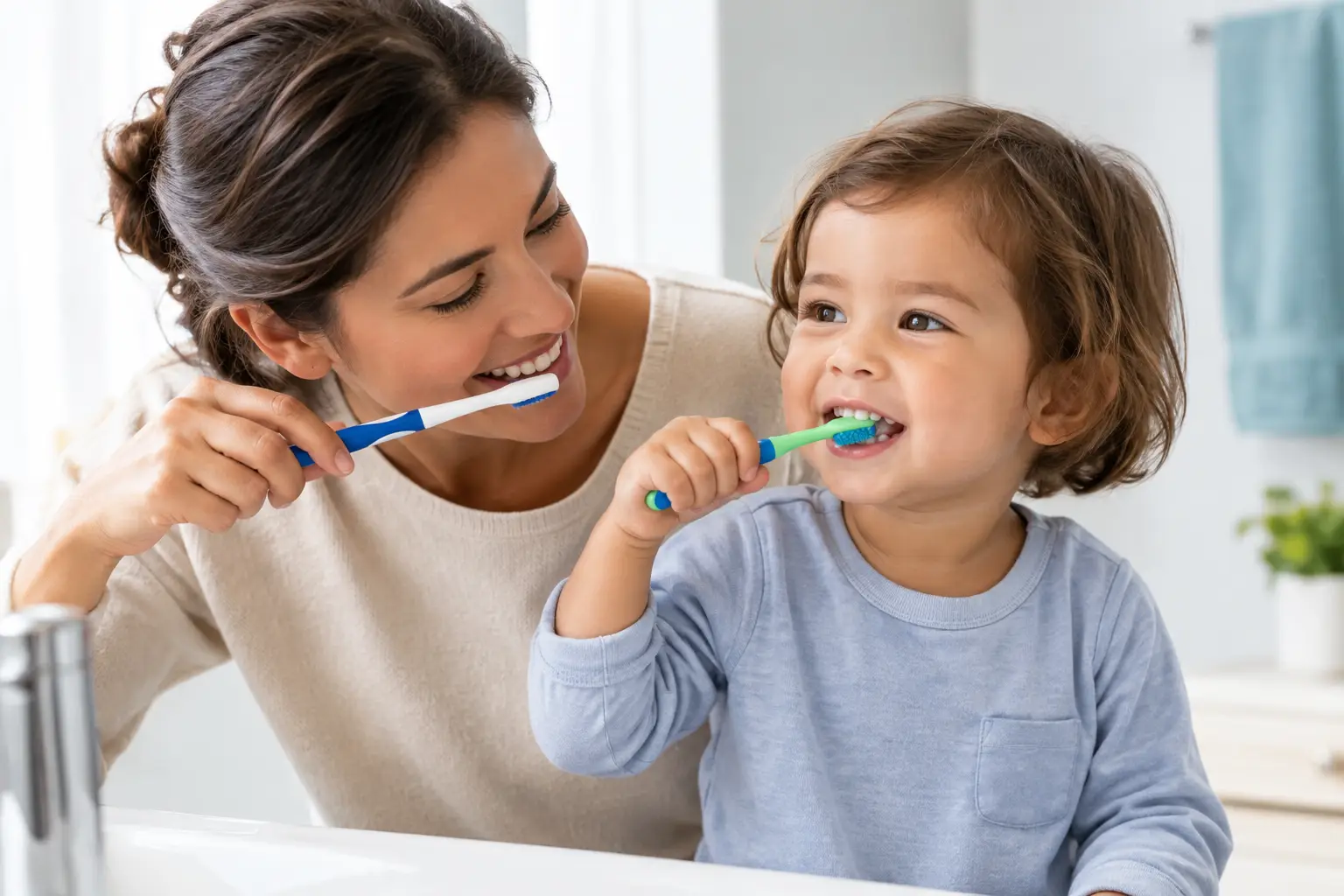
That tiny first tooth can arrive with a big new question: when should toddlers start brushing? The answer is earlier than many parents expect. Start brushing as soon as the first tooth appears, even if your child is still a baby and only has one small tooth to clean. Early brushing protects developing teeth and helps your child see oral care as an ordinary part of the morning and bedtime routine.
For busy families, the goal is not a perfect, picture-ready brushing session. It is a short, calm routine your child learns to expect, with a parent doing the thorough cleaning.
When should toddlers start brushing?
Toddlers should have their teeth brushed twice a day from the time their first tooth erupts. Before teeth appear, you can gently wipe your baby’s gums with a clean, damp cloth after feeds. This is optional, but it can help establish the habit of caring for their mouth before brushing becomes necessary.
Once teeth are present, use a soft, child-sized toothbrush and fluoride toothpaste. Tooth decay can begin in baby teeth, including teeth that are newly erupted. Baby teeth also help children chew, speak clearly, and hold space for adult teeth, so keeping them healthy matters.
Bedtime brushing deserves particular attention. During sleep, saliva flow naturally decreases, so teeth have less protection against sugars and acids left behind from food, milk, or sweet drinks. After brushing at night, water is the best choice if your child needs a drink.
How much toothpaste does a toddler need?
The amount is very small. For children under age three, use a smear of fluoride toothpaste about the size of a grain of rice. From age three to six, use a pea-sized amount. A parent should place the toothpaste on the brush and supervise brushing, especially because young children may swallow toothpaste instead of spitting it out.
Choose a toothpaste with fluoride unless your dentist has advised otherwise. Fluoride strengthens tooth enamel and helps prevent cavities. The small recommended amount is designed to provide protection while limiting how much toothpaste a young child may swallow.
You do not need to make rinsing part of the routine. Once your child can spit reliably, encourage them to spit out the toothpaste, but avoid having them rinse thoroughly with water right away. Leaving a small amount of fluoride on the teeth can be helpful. If they are not ready to spit, use the correct tiny amount of toothpaste and wipe away excess foam if needed.
Keep toothpaste out of reach between brushing sessions. Toddlers are curious, and flavoured toothpaste can look like a treat.
A parent should do the brushing
Toddlers can hold a toothbrush, copy your movements, and take a turn at the sink. That is great practice, but it is not the same as effective brushing. Their hand control, attention span, and understanding are still developing.
Let your child begin if it helps them participate, then follow with a parent-led brush. Use gentle, small circles along the front, back, and chewing surfaces of every tooth. Angle the brush toward the gumline and spend a little extra time where teeth touch each other or where food tends to collect.
Most children need hands-on help with brushing until about age seven or eight. Rather than focusing only on age, look at ability. Can your child reach all areas of their mouth, brush for two minutes, and consistently clean well without reminders? Until then, adult help is still part of good dental care.
Making toddler brushing easier at home
A toddler who refuses brushing is not being difficult for the sake of it. They may be tired, sensitive to the sensation, eager to stay in control, or simply more interested in the next activity. Consistency usually works better than pressure.
Give your child a simple choice, such as whether they want to brush before or after putting on pyjamas, or which child-sized toothbrush they would like to use. Keep the non-negotiable part clear: teeth get brushed twice a day, but they can have a little say in how the routine happens.
A short song, a two-minute timer, or brushing together in front of a mirror can make the process feel more familiar. Some children do best sitting on a parent’s lap with their head supported, while others cooperate better standing at the sink. Try a different position before assuming your child dislikes brushing itself.
If your toddler clamps their mouth shut or becomes upset, stay calm and try again after a brief pause. Avoid turning brushing into a long negotiation. A gentle, quick brush is better than skipping the routine entirely. If resistance continues or you notice pain when brushing, arrange a dental visit to rule out a sore tooth, irritated gums, or another concern.
Food, drinks, and cavity prevention
Brushing is central to preventing cavities, but everyday eating and drinking habits matter too. Frequent exposure to sugar is often harder on teeth than enjoying a sweet food occasionally with a meal. Each snack or sip of a sugary drink gives mouth bacteria another chance to produce acids that weaken enamel.
Offer water between meals whenever possible. Limit juice, sweetened drinks, and frequent sipping from cups or bottles. Milk can be part of a healthy diet, but letting a toddler fall asleep with a bottle or sippy cup containing milk can leave sugars on the teeth for hours. After the bedtime brush, stick to water.
Sticky snacks and frequent grazing can also cling to teeth. You do not need to make family life rigid, but regular meals and snack times make it easier for teeth to recover between exposures. A balanced diet, water, and twice-daily brushing create a practical foundation.
When should a toddler see the dentist?
A child’s first dental visit is generally recommended within six months of the first tooth appearing, or by their first birthday, whichever comes first. This appointment is often brief and gentle. It gives the dental team a chance to check tooth development, look for early signs of decay, and answer practical questions about brushing, fluoride, feeding, and habits such as thumb-sucking or soother use.
Starting early also helps children become comfortable with the dental office before they need treatment. A positive first visit can make future checkups feel much more routine for both children and parents.
Book sooner if you notice white, chalky areas near the gumline, brown spots, a chipped tooth, swollen gums, ongoing bad breath, tooth pain, or sensitivity to hot or cold foods. White spots can be an early sign of enamel weakening, and prompt advice may help prevent a cavity from progressing.
If your toddler has a dental injury, such as a knocked, loose, or broken baby tooth, contact a dentist promptly. Do not try to put a knocked-out baby tooth back into place, as this can affect the developing adult tooth underneath. For families in Aurora and York Region, Prime Smile Dental Clinic can help assess children’s dental concerns and provide clear next steps.
Small habits, lasting confidence
Toddlers do not need to love brushing every day for the habit to work. They need a caring adult, a soft brush, the right amount of fluoride toothpaste, and a routine that happens consistently. Start with the first tooth, keep the process calm, and give your child time to grow into the independence that comes later. Those two small brushing sessions each day can protect more than baby teeth – they can help your child feel confident that dental care is simply part of being well looked after.