
A sore spot on the tongue can seem easy to dismiss, especially if it does not hurt much. But some changes in the mouth deserve more than a wait-and-see approach. Knowing the top signs of oral cancer can help you seek an assessment early, when treatment is often simpler and outcomes can be better.
Oral cancer can affect the lips, tongue, cheeks, gums, floor of the mouth, roof of the mouth, and throat area. It is not something you can diagnose by looking in the mirror, and many mouth changes turn out to be harmless. Still, a dental or medical professional should examine a symptom that lasts longer than two weeks, grows, bleeds, or feels unusual.
Top Signs of Oral Cancer to Watch For
The most helpful rule is to pay attention to changes that do not heal or return repeatedly. A canker sore, accidental cheek bite, or irritation from a sharp tooth often improves within one to two weeks. A persistent change needs a closer look.
A sore that does not heal
A non-healing sore is one of the most recognised signs of oral cancer. It may appear as an ulcer, a rough patch, or an area that looks raw. It may be painless, so the absence of pain should not be used as reassurance.
Sores can also result from dentures that rub, braces, a broken filling, or a sharp tooth edge. Those causes still need attention, both to relieve the irritation and to confirm the area heals after the source is corrected.
Red, white, or mixed-colour patches
A red patch, white patch, or a patch with both red and white areas anywhere in the mouth should be assessed if it persists. These changes can occur on the tongue, inside the cheeks, gums, or roof and floor of the mouth.
Not every patch is cancerous. For example, certain infections, irritation, and oral conditions can change the colour of soft tissues. The concern is persistence and appearance, which is why an in-person examination matters more than trying to identify the cause yourself.
A lump, thickened area, or unexplained swelling
Feel for a firm lump, thickening, or swelling in the cheek, lip, jaw, neck, or under the tongue. You may notice it while brushing, shaving, applying lipstick, or eating. Some swellings are linked to dental infections, salivary gland concerns, or trauma, but any unexplained lump should be checked promptly.
A swelling accompanied by fever, facial pain, or a bad taste may point to a dental infection. This can require urgent dental care even when it is not related to cancer.
Ongoing pain, numbness, or a burning feeling
Pain in the mouth, tongue, jaw, or ear that continues without an obvious explanation should not be ignored. So should numbness, tingling, or a persistent burning sensation in the lips, face, or mouth.
Pain alone is common and can have many causes, including tooth decay, clenching, gum disease, and temporomandibular joint concerns. The key is whether it continues, worsens, or occurs alongside a sore, patch, lump, or change in function.
Difficulty chewing, swallowing, or speaking
A feeling that food is catching in your throat, discomfort with swallowing, or a sensation that something is stuck can require assessment. Changes in speech, persistent hoarseness, or difficulty moving the tongue or jaw may also be warning signs.
These symptoms can be caused by reflux, infections, dry mouth, medication effects, or other health conditions. However, if they last more than two weeks, especially with a neck lump, mouth sore, or unexplained weight loss, arrange an appointment without delay.
Loosening teeth or denture changes
An adult tooth that becomes loose without a clear injury or advanced gum disease should be examined. Changes in how dentures fit can also matter, particularly when they are sudden or occur with a sore area on the gums.
It is easy to assume a loose tooth is simply a dental issue, and it often is. A dentist can assess the tooth, gums, jawbone, and surrounding tissues to identify what is causing the change.
Who May Have a Higher Risk?
Anyone can develop oral cancer, including people who do not smoke or drink alcohol. Risk can be higher with tobacco use, frequent heavy alcohol use, human papillomavirus (HPV), long-term sun exposure to the lips, and a history of oral cancer. Age can also play a role, though oral cancer can occur in younger adults.
The combination of tobacco and alcohol raises risk more than either factor alone. If you smoke, vape, chew tobacco, or use nicotine products, a dental visit is a useful opportunity to discuss non-judgmental support for quitting and to have the mouth examined.
It is also worth remembering that risk factors are not a checklist for deciding whether a symptom matters. A persistent sore or patch deserves attention whether you have known risk factors or not.
What Happens During an Oral Cancer Screening?
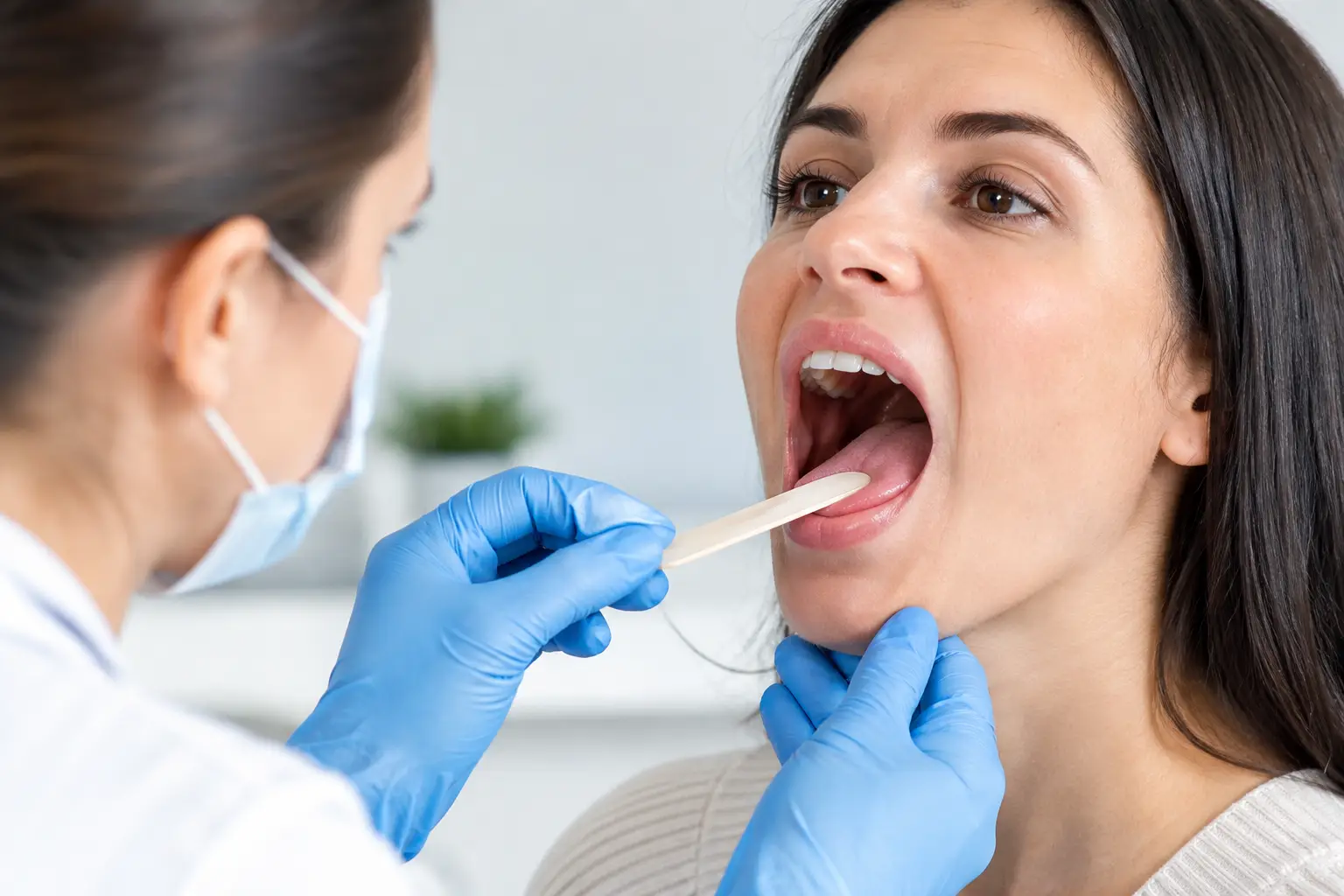
An oral cancer screening is usually quick and comfortable. During a routine dental examination, your dentist looks at the lips, cheeks, gums, tongue, palate, throat area, and tissues under the tongue. They may gently feel areas of the neck and jaw for lumps or swelling.
If an area looks unusual, the next step depends on what is found. Sometimes the likely cause is irritation from a tooth, appliance, or infection, and the area can be reviewed after treatment. If the concern remains, your dentist may recommend prompt follow-up with a physician, oral surgeon, or specialist. A biopsy is the only way to confirm whether a suspicious area is cancerous.
Do not postpone a visit because you are worried about what might be found. An examination provides clarity. Many concerning-looking mouth changes have treatable, non-cancerous explanations, and early assessment is the practical step in either case.
When to Book Promptly and When to Seek Urgent Help
Book a dental appointment soon if you have a mouth sore, coloured patch, lump, pain, numbness, or swallowing concern lasting longer than two weeks. You should also arrange an assessment earlier if a symptom is getting larger, bleeding easily, or interfering with eating, speaking, or wearing dentures.
Seek urgent medical help for severe swelling that affects breathing or swallowing, rapidly spreading facial swelling, uncontrolled bleeding, or a high fever with significant dental or facial pain. Those symptoms may signal a serious infection or another urgent condition.
For Aurora and York Region families, routine dental examinations offer a convenient time for this check. At Prime Smile Dental Clinic, oral tissues can be assessed as part of comprehensive preventive care, alongside the cleaning and dental examination that help protect everyday oral health.
Small Habits That Support Early Detection
A monthly look inside your mouth can help you notice changes between appointments. In good lighting, check your lips, cheeks, gums, tongue, and the area beneath the tongue. Look for new sores, patches, swelling, or areas that do not look or feel normal.
Regular dental visits remain more reliable than self-checks alone. Some changes are difficult to see, particularly near the back of the mouth or beneath the tongue, and a trained clinician can spot subtle concerns that may not be obvious at home.
If you notice something unusual, take a clear photo and make a note of when it began. This can help you track whether it is healing and give useful context at your appointment. Avoid repeatedly poking or scraping the area, which can make irritation worse.
A mouth change is not a reason to panic, but it is a reason to act. Booking an examination when something persists gives you the reassurance, treatment, or referral you need without unnecessary delay.