
A child’s first loose tooth, a new adult tooth, or a sudden complaint that something hurts can make parents wonder: how often should children visit the dentist? For most children, routine dental visits every six months are a helpful starting point. However, the best schedule depends on your child’s age, cavity risk, oral hygiene habits, orthodontic needs, and what their dentist sees during examinations.
Regular visits are not just about cleaning teeth. They give families a consistent opportunity to prevent small concerns from becoming painful, disruptive, or more costly to treat. For busy parents in Aurora and York Region, having a clear plan also makes appointments easier to schedule around school, work, and family routines.
How Often Should Children Visit the Dentist?
Most children benefit from a dental examination and hygiene appointment every six months. This timing allows the dental team to monitor how teeth and jaws are developing, remove plaque and tartar that brushing may miss, and spot early signs of tooth decay or gum irritation.
Some children may need to come in more often, such as every three or four months. That does not mean anything is seriously wrong. It may simply be the right preventive approach for a child who has had cavities, finds brushing difficult, is wearing braces or aligners, snacks frequently, or has a health condition that affects oral health.
Other children with a very low risk of cavities may be advised to follow a different schedule. Your child’s dentist can recommend an interval based on their individual needs rather than treating every family the same way.
Start Dental Visits Early
Children should have their first dental visit by their first birthday or within six months of the first tooth appearing. This early appointment is usually brief and gentle. It helps your child become familiar with the sights, sounds, and people in a dental office before treatment is needed.
For parents, it is also a chance to ask practical questions about teething, thumb or finger sucking, pacifiers, bottle use, brushing, fluoride toothpaste, and diet. Early guidance can make daily care feel far more manageable.
A first visit does not need to wait until all baby teeth are in. Baby teeth matter because they help children chew, speak clearly, and hold space for permanent teeth. They can also develop cavities, sometimes quickly, especially when sugary drinks or frequent snacks are part of the routine.
Why Six-Month Checkups Work Well for Many Families
Children’s mouths change quickly. Teeth erupt, bite patterns develop, and brushing skills improve gradually rather than overnight. A six-month interval gives the dental team enough regular contact to notice changes early.
At a typical visit, the dentist may examine teeth and gums, check jaw and bite development, assess cavity risk, and discuss habits that may affect oral health. When appropriate, dental X-rays may be recommended to check areas between teeth or beneath the gums that cannot be seen during a visual examination. X-rays are not required at every visit and are selected based on clinical need.
A hygiene visit may include a gentle cleaning, polishing, and age-appropriate coaching on brushing and flossing. Children often respond well to simple, positive instructions they can practise at home. For parents, these visits can confirm whether the current routine is working or whether a small adjustment could help.
When Your Child May Need More Frequent Visits
A shorter recall schedule can be useful when a child has a higher chance of developing cavities or other oral health concerns. This is common and should be viewed as supportive care, not a judgement about parenting or brushing.
Your child’s dentist may suggest more frequent visits if they have had recent cavities, visible plaque buildup, bleeding gums, enamel weakness, dry mouth, or difficulty tolerating brushing. More frequent monitoring can also help children with braces, as food and plaque can collect around brackets and wires.
Diet can play a role as well. It is not only the amount of sugar that matters, but how often teeth are exposed to it. Sipping juice, sweetened drinks, sports drinks, or flavoured milk throughout the day can increase cavity risk. Frequent sticky snacks can do the same. A dentist can help you make realistic changes without turning family meals into a source of stress.
Children with certain medical needs, medications that cause dry mouth, or challenges with sensory sensitivity and daily oral hygiene may also benefit from a more individualized schedule. The goal is always to make prevention practical and comfortable.
Do Not Wait for a Routine Appointment If Something Feels Wrong
Routine checkups are valuable, but a child should be seen sooner when there is pain, swelling, a broken tooth, or another urgent concern. Children do not always describe dental symptoms clearly, so changes in eating, sleeping, mood, or willingness to brush can be useful clues.
Contact a dental clinic promptly if your child has a toothache that lasts more than a day, facial or gum swelling, a chipped or cracked tooth, bleeding that does not stop after gentle pressure, a knocked-out permanent tooth, or an injury to the mouth or jaw. A darkened tooth after a fall should also be assessed, even if your child says it does not hurt.
For a knocked-out permanent tooth, time matters. Handle the tooth by the crown rather than the root, rinse it gently if dirty, and seek urgent dental advice. Do not try to reinsert a baby tooth, as this can affect the developing permanent tooth beneath it.
What Parents Can Do Between Visits
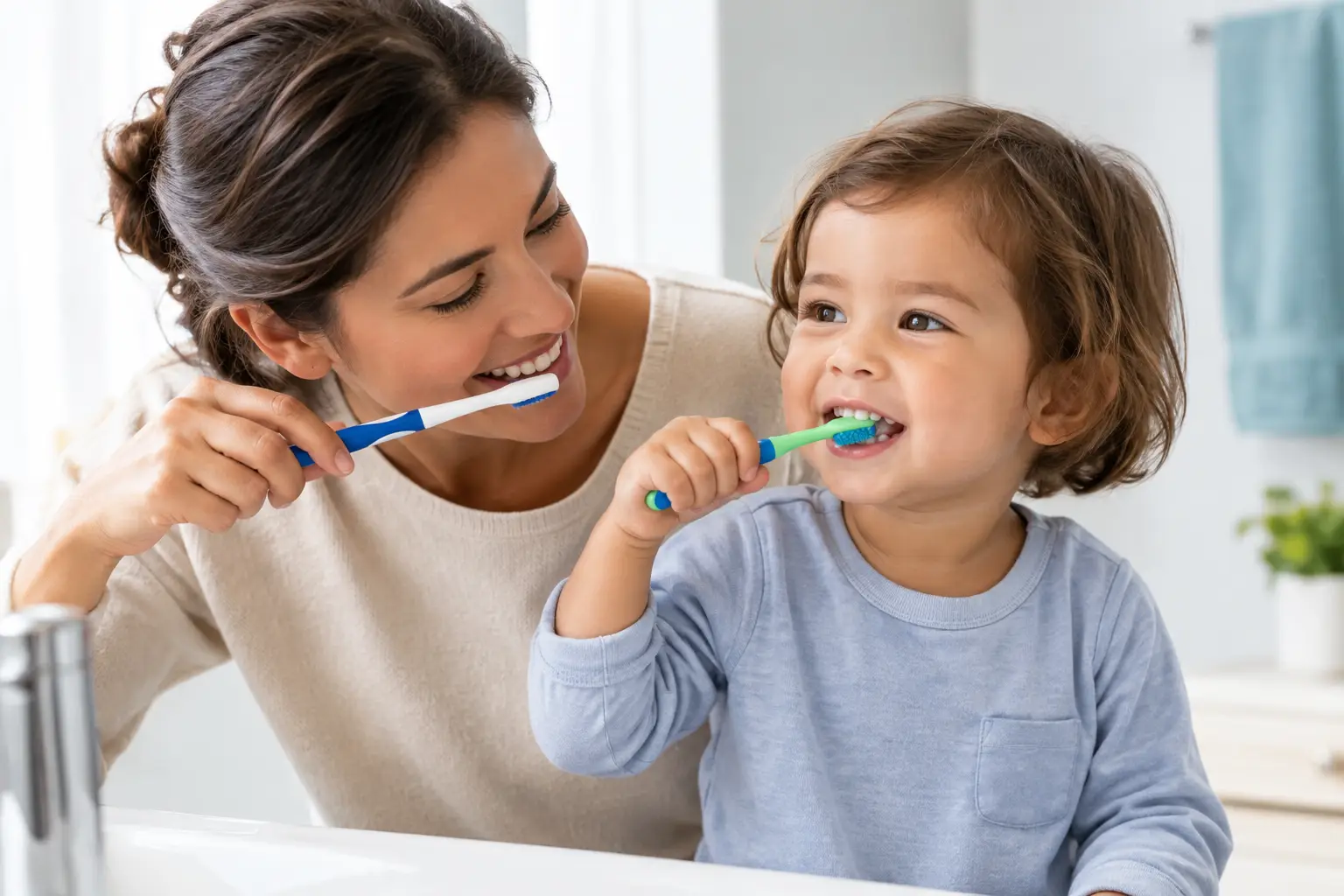
Dental appointments work best alongside a steady home routine. Young children usually need an adult to brush their teeth thoroughly, even when they want to take the lead. A good approach is to let your child practise first, then have an adult finish the job.
Brush twice daily with a soft toothbrush and fluoride toothpaste. For children under three, use a rice-grain-sized smear. For children ages three to six, use a pea-sized amount. Encourage them to spit out excess toothpaste rather than rinse heavily, which allows fluoride to keep protecting the teeth.
Flossing should begin once teeth touch each other. This is often needed sooner than parents expect, particularly between back teeth where toothbrush bristles cannot reach well. Water should be the main drink between meals, and sugary drinks are best kept for occasional use rather than everyday sipping.
Just as helpful is making dental care predictable. Choose appointment times that suit your child’s energy level, tell them simply what will happen, and avoid using dental visits as a threat or punishment. A calm, matter-of-fact approach helps build confidence over time.
A Visit Schedule That Fits Your Child
There is no prize for waiting until a dental issue becomes obvious. Preventive visits are generally simpler, more comfortable, and easier for children to accept than appointments made because of pain. They also give parents a reliable place to raise questions as their child grows, whether the topic is brushing, cavities, crowding, sports guards, or a new orthodontic concern.
At Prime Smile Dental Clinic, families can receive guidance on a visit schedule that reflects their child’s actual needs and fits into everyday life. A regular checkup every six months is a strong starting point, but the most helpful next step is booking care before your child needs urgent treatment.